

Mindful Investing: How to Balance Your Emotions
While Investing in the Bull and Bear Market?
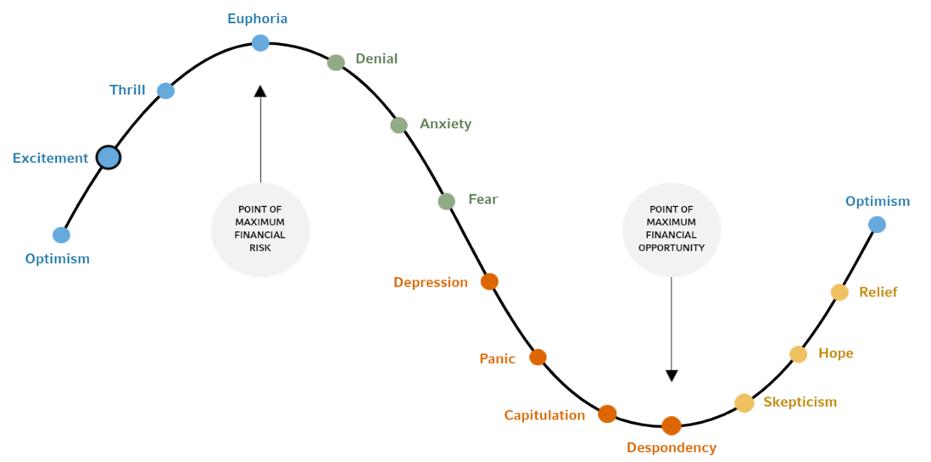
| Life has its cycles, as do the economy and the financial markets. But emotions often get in our way when it comes to market cycles. Strong feelings can cloud our judgment and lead us to make financial decisions that may not support our long-term goals. Taking a moment to ask yourself what is driving a decision can act as a circuit-breaker and lead to better outcomes. Practicing mindfulness can help you develop discipline in financial decision-making and also help manage your emotions in the face of market ups and downs. Understanding the market cycles and paying close attention to our feelings can help us stay on track. Three steps to becoming a mindful investor 1. Be aware of your emotions: Recognize when emotions influence everyday, low-stakes decisions, but realize that relying on emotions may not be effective when making investment choices for long-term goals. 2. Understand that “going with your gut” can lead to better or worse choices, depending on the situation and person. 3. Practice mindfulness when the market becomes volatile, and you feel strong emotional impulses. This involves pausing to reflect, meditating, noticing what you are grateful for, focusing on your long-term objectives, or simply asking yourself why you feel a certain way. These activities can help you act thoughtfully rather than impulsively. Emotions during various phases of the market 1. At the top: FOMO (Fear of missing out), Overconfidence, Greed, Group mentality; Focus on putting barriers and not getting caught in continuing as-is thinking. 2. Market Slides down: Fear, temptations, and planning fallacy. At this time, take a moment to focus on the things in your life that make you feel grateful, not on the market. 3. Hitting Bottom: Depression, pessimism, and decision paralysis set in. However, self-compassion and perseverance are vital. Don’t forget: You did well before the downturn, and take pride in that. 4. Rebounding: PTSD and fear of being hurt again. Skepticism and hope will affect your investment decision. More Here and Here. |
| View |
| Tarak Vasavada, MD HappyMind MD |