


Time and time again, Finland, a charming small country in the Baltic region, is celebrated as the happiest. What’s their secret? It’s likely a wonderful mix of a solid democracy, a commitment to equality, and a strong support system. Plus, many scholars have highlighted the special personality of the Finnish people. They show a wonderful blend of stoic resilience and happiness, primarily through their cherished idea of “Sisu” and their focus on contentment rather than just outward displays of joy.
In this discussion, I’ll explore the idea of contentment as Western philosophers and psychologists see it. I will write on Contentment beliefs and ideas in other religions someday.
What is contentment?
Contentment is a warm and peaceful state of feeling satisfied with where you are right now. It brings a gentle sense of happiness and fulfillment that isn’t dependent on always wanting more. It’s like a soothing, deep calm that makes you feel whole in the present moment. Unlike fleeting happiness, contentment is a steady and enduring feeling that can genuinely enrich your life.
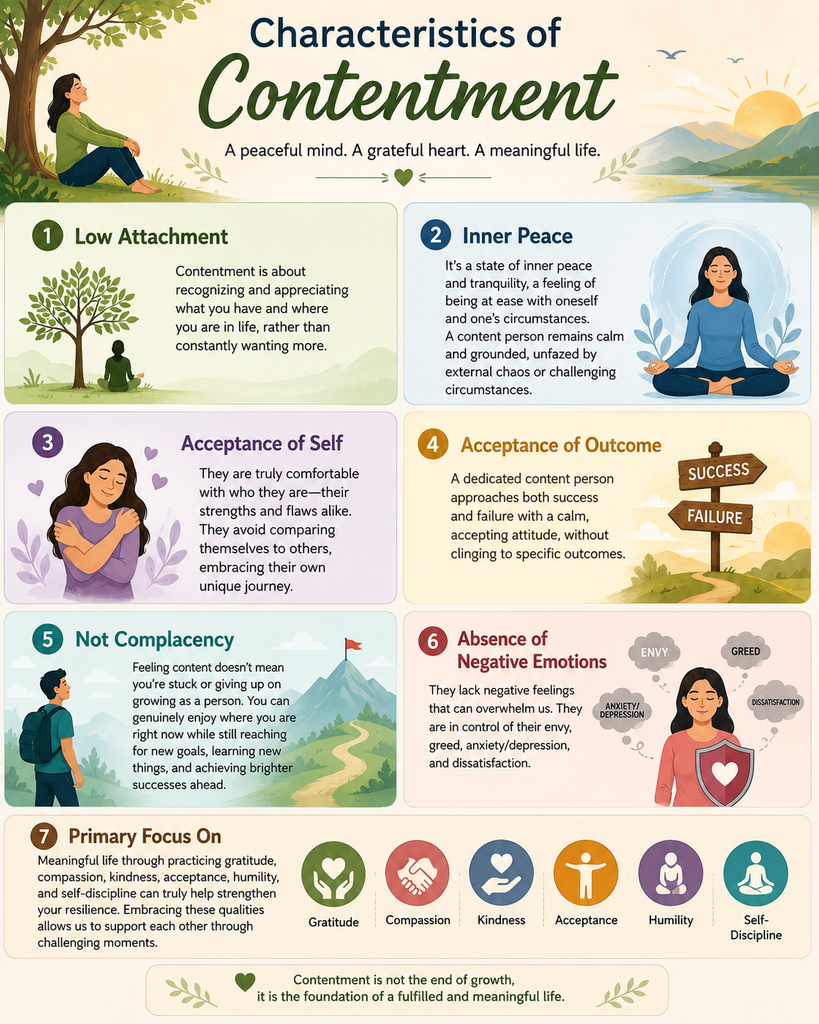
Characteristics of Contentment:
-Low attachment:
Contentment is about recognizing and appreciating what you have and where you are in life, rather than constantly wanting more.
-Inner peace:
It’s a state of inner peace and tranquility, a feeling of being at ease with oneself and one’s circumstances. A content person remains calm and grounded, unfazed by external chaos or challenging circumstances.
-Acceptance of Self:
They are truly comfortable with who they are—their strengths and flaws alike. They avoid comparing themselves to others and embrace their own unique journey.
-Acceptance of outcome:
A dedicated content person approaches both success and failure with a calm, accepting attitude, without clinging to specific outcomes.
-Not complacency:
Feeling content doesn’t mean you’re stuck or giving up on growing as a person. You can genuinely enjoy where you are right now while still reaching for new goals, learning new things, and achieving brighter successes ahead.
-Absence of negative emotions:
They lack negative feelings that can overwhelm us. They are in control of their envy, greed, anxiety/depression, and dissatisfaction.
-Primary focus on:
Meaningful life through practicing gratitude, compassion, kindness, acceptance, humility, and self-discipline can truly help strengthen your resilience. Embracing these qualities allows us to support each other through challenging moments.
Different from happiness:
Happiness can sometimes be linked to outside events and may pass quickly. It is a temporary feeling. Contentment is a calmer, more lasting feeling that you can nurture from within yourself. Some people equate it with Life satisfaction.
How to achieve Contentment?
The easiest way to embrace contentment is by exploring the guidance of psychologists and philosophers who focus on life satisfaction. Many of our ancient religions also teach us the value of being content. For Christians, discovering true contentment means nurturing a heartfelt trust in God’s provision and love, rather than chasing happiness through external circumstances.
Practice following the 12 Intentional activities to achieve happiness. Click above for my previous article.
- Practice mindfulness and constantly remind yourself of the basics of life principles that you want to live by.
- Check your surroundings constantly and balance emotions accordingly: Contentment comes from appreciating what you have, living simply, and being present in the moment. Strong relationships and meaningful connections enhance happiness, while engaging in purposeful activities brings lasting fulfillment. Accepting life’s imperfections with self-compassion allows for emotional balance.
- Prioritizing experiences over possessions and understanding your actual values fosters deeper satisfaction. Ultimately, being kind to yourself and staying true to who you are leads to a more peaceful and contented life.
- Personal Contentment: Contentment often arises from within, through pursuing passions, appreciating small joys, and recognizing individual achievements. Embracing gratitude and being satisfied with what you have, rather than always striving for more, nurtures a lasting sense of fulfillment.
- Through Personal Pursuits: Contentment often comes from simple, meaningful experiences, like sharing a meal with family, spending quality time with a friend, or feeling secure in a loving relationship. Even the quiet presence of a pet or the support of a caring community can foster a deep sense of peace and fulfillment.
- Remember the uplifting power of spirituality, whether you believe in God or a higher being. Having faith in a higher power can give you a comforting sense of security. It also helps you find deeper meaning in life and boosts your resilience during tough times.
Be kind to yourself, as contentment is a fluid state, and stressful events, your past, and your disease state will easily dislodge you from your path.
Tarak Vasavada, MD