

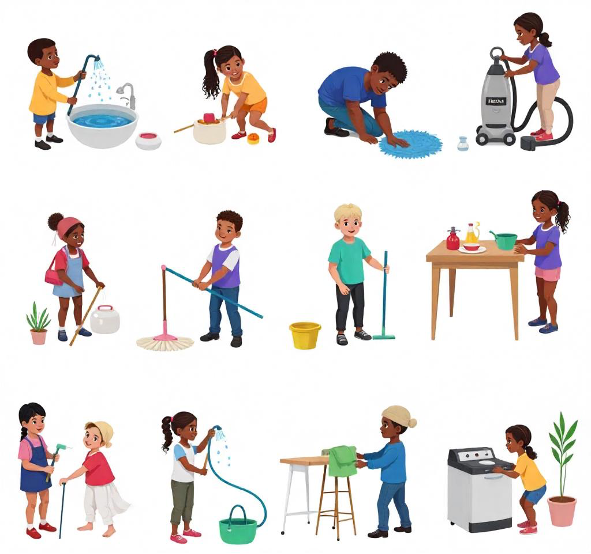
In their early years, children eagerly work toward independence, an essential part of their growth. From taking their first steps to exploring reading and writing, even toddlers are happily learning to be more self-sufficient each day. It’s lovely to see that 80% of parents support children taking part in daily chores, helping them build confidence and skills. Often, parents, teachers, and employers have expressed concern that many young people leave high school lacking essential life skills.
I came across this article on one of the learning academy websites. I found it to be convenient and easy to implement for your kids. The most challenging task would be to take their devices away. I have taken Gemini’s help to make this article interesting.
A. Responsibility and Self-Sufficiency:
How to Clean
This is more than just picking up a few toys—it means dishes, laundry, vacuuming, and more. Teaching your kids these skills early will make them habitual by the time they leave the house. Plus, teaching your kids cleaning skills will help you around the house!
How to Use Basic Tools
When you’re fixing things around the house, let your kids stick around! Give them simple tasks and ask them to problem-solve. By 10, your children should know how to use basic tools like a screwdriver or hammer safely.
How to Prepare a Simple Meal
On busy days, do your kids ever complain about how long it takes to get a meal on the table? Consider teaching your kids to make simple, safe meals to help reduce their complaining. Gently introduce your children to using different appliances, always emphasizing safety. By the time they are around 10 years old, they can start learning to use the stovetop (with supervision, of course!).
How to Make Healthy Choices
You are your child’s biggest role model—and that includes healthy lifestyle choices. It’s hard to stick to a diet and regular exercise routine, but you can make it easy for your kids by regularly stocking the fridge with fresh fruits and veggies and taking regular family walks.
B. Financial Literacy and Management:
How to Manage Money
Don’t wait until your child is heading to college to teach them about budgeting! As soon as your kids start earning money with either an allowance or a job, teach them to manage that money. Giving your children a strong start will help them be fiscally responsible adults.
C. Social and Emotional Intelligence:
How to Have Good Manners
Encourage good manners early. Use “please” and “thank you” with your children to set expectations for respectful behavior as they grow.
How to Show Gratitude
There’s a fine line between providing your kids with the best and spoiling them. Teach gratitude early, and they’ll carry it into adulthood.
How to Advocate for Themselves
Remember, your children will face challenges at school that they’ll need to handle on their own. Teaching them to speak up confidently using logic will benefit them throughout their lives.
D. Communication and Literacy:
How to Write a Letter
Even though the Internet is our primary way to communicate through writing these days, there’s a unique charm in writing letters. It’s a valuable skill for crafting emails and job applications, especially cover letters. Encourage your kids to send letters to family members—they’ll enjoy the process, and it helps boost their writing skills and patience. Remember, a handwritten letter has an exceptional warmth and personal touch, making it a lovely tradition to keep alive.
How to Find Their Way Home
While GPS is beneficial on smartphones, it’s wonderful to teach kids not to depend on it entirely, especially during emergencies when it might not be working. Do encourage them to notice landmarks around them as a way to find their way home. This handy skill will become instinctive once they start driving, giving them more confidence and independence.
With these 10 skills, your kids will be equipped to tackle most of the hurdles life throws at them. And they’ll know they can turn to you for help in the process!
Tarak Vasavada, MD