

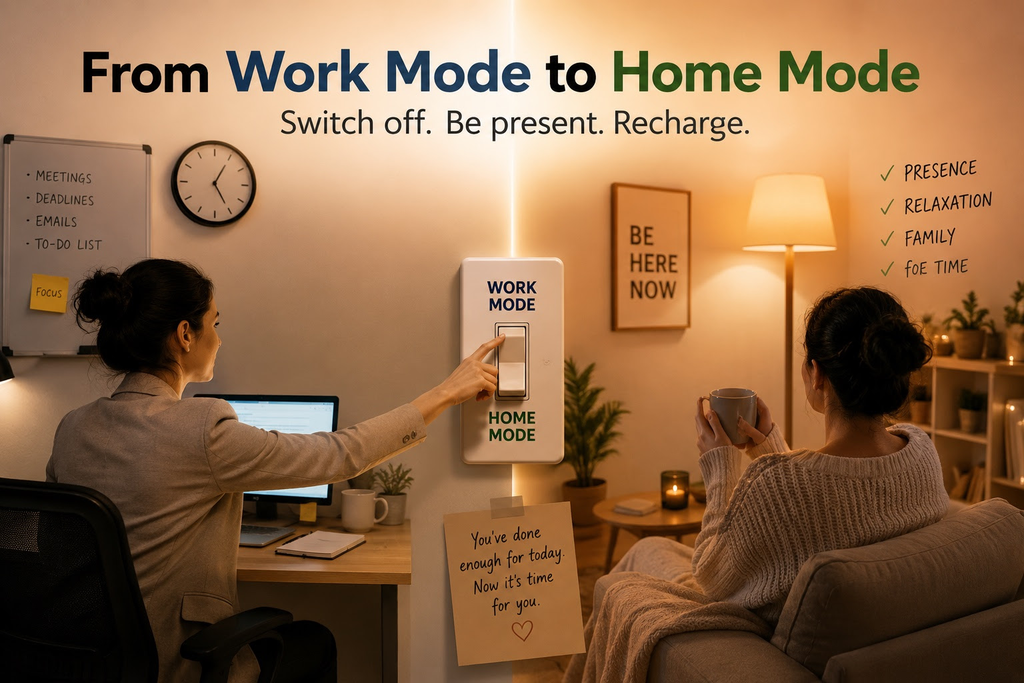
With modern technology, we must stay connected to our work. In the medical field, this is called “pajama time.” We continue to work at home instead of spending time with our loved ones. If you do not practice detachment, you will inevitably burn out.
Strategies for Switching Off:
- Tie up loose ends before you leave: finish any remaining tasks for the day in the office, clean your desk, and, if possible, assign your duties to others.
- Set Boundaries: Establish clear boundaries between work and personal life. This includes setting specific times to stop checking email and to disconnect from work-related communication.
- Disconnect from Work: Mute work notifications, turn off your work phone, and avoid bringing work-related devices into personal spaces.
- Engage in Relaxing Activities: Find hobbies, read a book, listen to music, take a walk, or connect with friends and family.
- Practice Mindfulness: Deep breathing exercises, meditation, and other mindfulness practices can help you shift your focus and reduce stress.
- Create a Routine: Develop an evening routine that signals the end of work and the start of relaxation. This could include changing into comfortable clothes, taking a shower, or preparing a relaxing beverage.
- Acceptance and Self-Care: Acknowledge that work-related thoughts may linger, and be kind to yourself as you learn to disconnect.
- Create a Dedicated Workspace: Having a separate workspace at home can help create a physical and mental boundary between work and personal life.
- Utilize Annual Leave: Disconnecting from work during annual leave is essential for rest, recovery, and overall well-being.
Tarak Vasavada, MD