

Weight Loss Drug Fill Rates by State
Obesity affects roughly 42% of U.S. adults, according to the Centers for Disease Control and Prevention (CDC). And about two-thirds of Americans (65%) say willpower alone usually isn’t enough for most people who are trying to lose weight and keep it off, according to a new Pew Research Center survey.
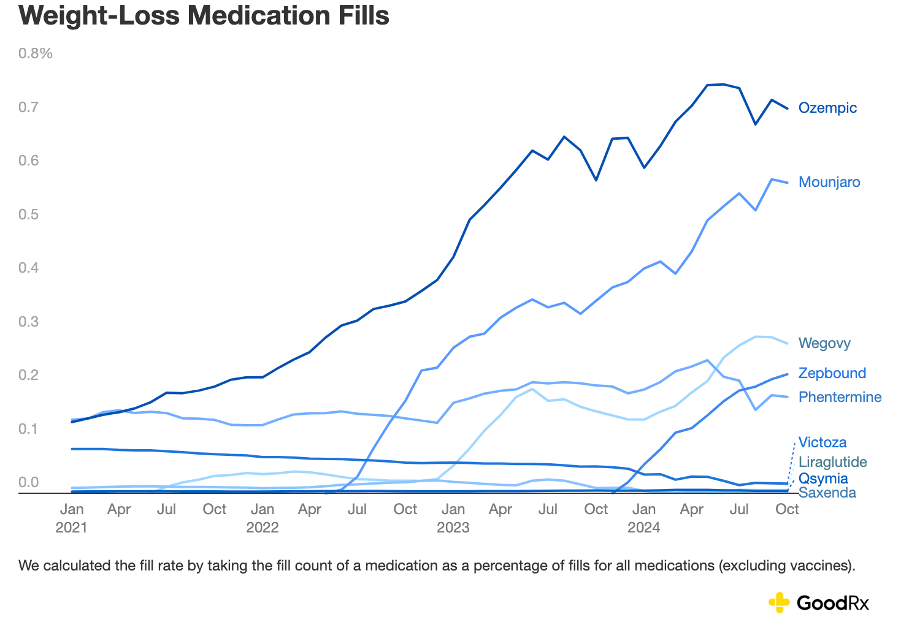
GLP-1 drugs’ usage has increased sharply in the last few years.
- Prevalence: Around 12% of U.S. adults reported using GLP-1 drugs by late 2024/early 2025, up from about 6% in early 2024, notes KFF and Gallup.
- Demographics: Women, those 50-64, and individuals with diagnosed diabetes, heart disease, or obesity are more likely to use these medications, according to RAND, KFF, CDC, and Columbia University Department of Psychiatry.
- Prescribing Patterns: Prescriptions for semaglutide (Wegovy) and tirzepatide (Zepbound) are increasing, with primary care physicians and advanced practice providers (APPs) leading the way, according to JAMA and the CDC.
- Impact: Increased use correlates with a decline in the U.S. obesity rate, notes Gallup and Healthline.
- Cost & Access: High costs are a significant concern, making them difficult for many to afford, reports KFF.
According to GoodRx data, Alaska had the highest percentage of medication fills for weight-loss drugs this year. The figures below represent the percentage of total medication fills for diabetes or weight-loss indications. Since the beginning of 2024, fills for Wegovy and Zepbound have surged by over 100% and 300%, respectively. Regionally, states in the South had higher fill rates for diabetes medications, whereas states in the Northeast had the highest fill rates for weight-loss medicines.
Weight loss drug fill rates by state, per GoodRx:
Alaska — 2.57%
Oklahoma — 2.17%
Texas — 2.03%
Alabama — 1.98%
New Jersey — 1.85%