


Trauma is a natural part of life, and it is challenging to avoid, no matter how we try to protect ourselves and our children. One study reported that the likelihood of someone experiencing or witnessing trauma is 66%. Interestingly, the rate of active PTSD in a community is about 8%. So, how are the remaining 58% coping, surviving, and even thriving? It’s the power of resilience.
What Is Resilience?
Resilience is defined as a phenomenon or process that reflects a relatively successful adaptation to surviving and thriving despite significant adversity, trauma, or stress.
- Resiliency goes beyond managing the symptoms of stress.
- You are not born with it, and you can cultivate it or lose it.
- It is a dynamic process that leverages your inner strengths, including optimism, cognitive skills, mindfulness, humor, and acceptance. Using all available resources will lead to survival, a possible normal life, and thriving.
- It helps maintain a constant positive state and minimal negative emotions, enabling focus on productivity and helping others.
- It helps to foster positive post-traumatic growth, enabling individuals to help others through altruism.
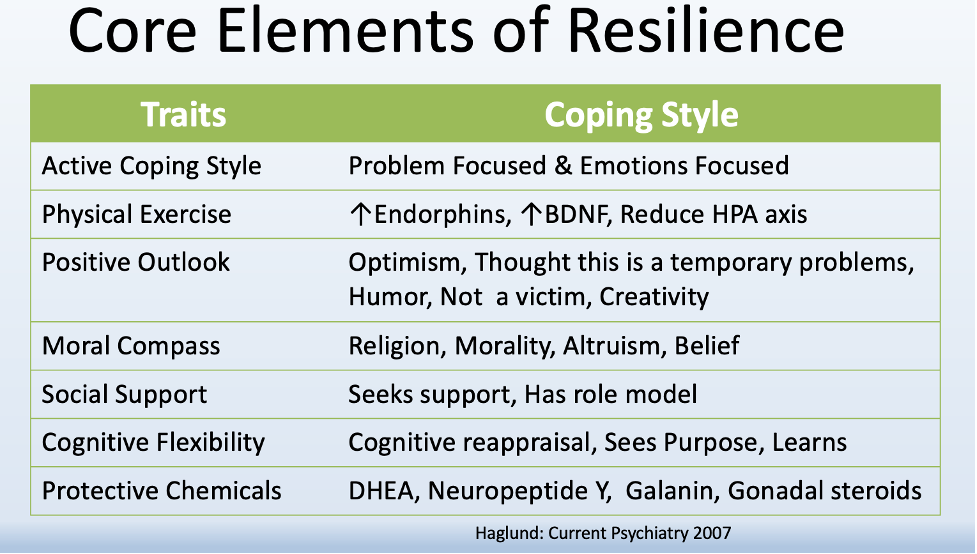
What are the core elements of Resilience?
- Active Coping Style: I previously wrote about active coping styles. Essentially, there are four coping styles. Appraisal-focused (awareness and understanding of all factors in stressful situations), Problem-focused (Managing the problem early and effectively), Emotion-focused (regulation of emotions and bringing higher defenses like humor and altruism), and Meaning-Focused (Seeing a higher purpose and meaning, forgiving, and use of higher powers)
- Positive Outlook: Resilient people know how to maintain their optimism. They see adversity as a temporary problem. They tend to focus on possibilities and solutions rather than dwelling on problems or adverse outcomes. They often view setbacks as opportunities for growth and learning.
- Moral Compass: They know where they are going. Their eyes are on their goals, and by developing and living by meaningful principles, and putting them into action through altruism, they continue to forge ahead.
- Social support: Individuals with strong social support tend to be more resilient than those without. Social support can reduce risk-taking behavior, encourage active coping, decrease loneliness, increase feelings of self-worth, and help a person put problems into perspective. Many resilient adults credit a parent, grandparent, or other role model for inspiring them to be strong.
- Cognitive Flexibility: Cognitive Processing therapy is the most beneficial treatment for PTSD survivors. Here, maladaptive beliefs are challenged. Acceptance is the ultimate goal.
- Finding Meaning through Cognitive Reframing is a common experience among survivors. Psychiatrist and Holocaust survivor Viktor Frankl wrote of the importance of “meaning making.” Despite suffering for years in Nazi concentration camps.
How can we develop resilience?
I have summarized these eight techniques from the Calm Blog:
1. Nurture strong relationships: Invest time and effort in building and maintaining meaningful connections for support and stability.
2. Prioritize physical health: A healthy body copes more effectively with stress and recovers more quickly from illness or fatigue.
3. Discover your purpose: This provides direction and motivation, which can be found in a job, hobbies, volunteering, or relationships.
4. Embrace change: Enhances resilience and flexibility by accepting and adapting to new opportunities and learning experiences.
5. Build self-confidence: Empowers you to tackle challenges effectively by reminding yourself of accomplishments and lessons learned.
6. Maintain perspective: Recognize your feelings but consider the bigger picture; write down both positive and negative aspects
7. Develop problem-solving skills: Enhances resilience by brainstorming solutions and deciding on a course of action.
8. Learn stress management techniques: Explore stress-relief activities, such as meditation, breathing exercises, yoga, therapy, walking, or journaling, to discover what suits you best.